World Food Day: Innovate Today. Nourish Tomorrow
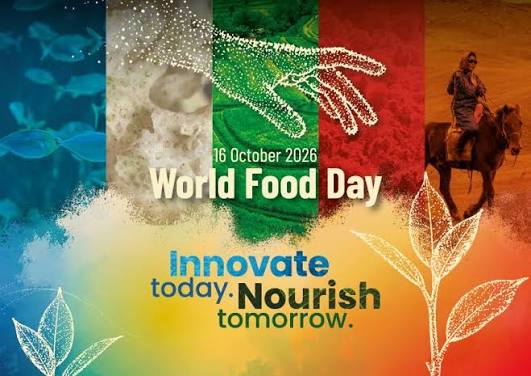
What if the solution to tomorrow’s food challenges is not simply to produce more food, but to produce, process, distribute and consume it differently? This question sits at the heart of World Food Day 2026, celebrated on 16 October under the theme “Innovate today. Nourish tomorrow.”. Led by the Food and Agriculture Organization of the United Nations (FAO), this year’s theme highlights the role of innovation in transforming agrifood systems and building a future where everyone has access to safe, nutritious and affordable food.
FAO 2026
Transformation is needed. Millions of people continue to face hunger, while billions cannot afford a healthy diet. At the same time, farmers and food businesses face climate shocks, rising production costs, changing markets, pests and diseases, limited access to finance and increasingly complex supply chains. Addressing these challenges requires new and better ways of doing things.
Innovation is not limited to advanced technology. It can involve adopting water-saving irrigation, improving storage, strengthening connections between farmers and markets, or developing new food products. Across Africa, farmers, agripreneurs, researchers and communities are finding practical ways to address local challenges. A cooperative buying inputs collectively to reduce costs, a young entrepreneur turning agricultural waste into a useful product, or a food processor making nutritious foods more affordable are all examples of innovation. The most valuable solutions are not necessarily the most complex, but those that respond to real needs and create value. Given the diversity of Africa’s agrifood systems, innovation must be accessible, practical and responsive to the needs of farmers, entrepreneurs and consumers.
In Rwanda, the FAO-led Fostering Digital Villages through Innovative Advisory and Profitable Market Services in Africa (FDiVi) project, developed with the Ministry of Agriculture and Animal Resources, aims to use digital tools to improve farmers’ access to agricultural advice and market information. In Malawi, the One Country One Priority Product initiative is supporting efforts to strengthen the banana value chain, including production, processing and marketing. Businesses such as Hortinet Foods Limited illustrate how approaches such as tissue culture and improved production practices can contribute to agricultural development. Together, these examples highlight how digital tools, improved production methods and value-chain collaboration can help build more resilient agrifood systems.
However, an innovative idea or technology does not automatically become a sustainable solution. Its success also depends on whether people can use it effectively, whether there is a viable market, and whether the business or organisation behind it can access the resources needed to continue. This is where entrepreneurship becomes essential: it helps turn ideas into practical solutions that respond to real needs and can be sustained over time. For Africa’s growing generation of agripreneurs, food-system challenges also present business opportunities. A vegetable farmer might use customer information to decide what crops to grow rather than relying on assumptions. A poultry entrepreneur could use digital records to monitor feed costs, mortality and profitability, while a mushroom producer might turn agricultural waste into a growing medium. A food entrepreneur could identify an underserved customer group and develop a product to meet its needs.
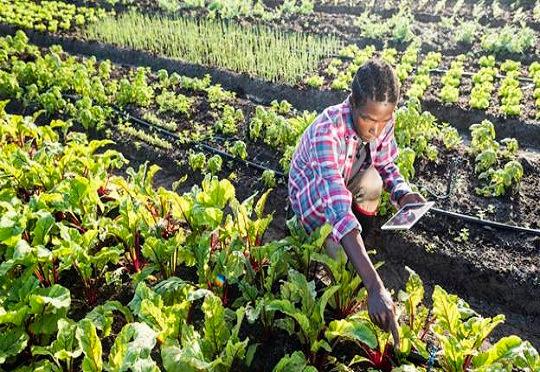
Photo Credit: Subman
These examples show how innovation and entrepreneurship work together. An idea becomes meaningful when it responds to a need, reaches the people who need it and creates value that can be sustained. Understanding customers, assessing market opportunities, analysing competitors and planning finances are therefore just as important as having a good idea. Even an innovative product may struggle if customers cannot afford it, do not know about it or cannot access it.
At the Agripreneurship Alliance (AAAM), entrepreneurship education is an important part of helping turn innovation into lasting results. Farmers and agrifood entrepreneurs need more than technical production skills; they also need the knowledge and networks to develop sustainable business models, manage finances, build partnerships and identify opportunities for growth. Through the Entrepreneurship in African Agribusiness (EiAA) course, AAAM helps aspiring and existing agripreneurs explore how to turn business ideas into viable, financially sustainable enterprises. The course covers ideation, understanding customers, assessing market opportunities, customer segmentation, competitor analysis, customer relationships and channels, identifying key partners, and financial planning. Participants are encouraged to ask: Who am I solving this problem for? What does my customer need? How large is the opportunity? What can I do differently? How will customers discover and access my product or service? What will it cost, how will I finance it, and which partnerships could help? Working through these questions helps learners develop solutions that are market-informed, customer-focused and responsive to real opportunities.
This approach connects directly with the question at the heart of World Food Day: how do we turn innovation today into benefits that last tomorrow?
AAAM’s first multidimensional assessment of longer-term impact, Growing Agripreneurs and Ecosystems: What happens after the training ends? (here), explores how entrepreneurship education and Training of Trainers programmes have contributed to individuals, businesses, institutions and wider agripreneurship ecosystems between 2018 and 2026. Rather than looking only at the number of participants trained, the assessment considers what happens when participants apply their learning and how that knowledge can reach others.
The findings offer evidence of what can happen when knowledge is put into practice. Among survey respondents, 53% reported that the programme had helped them start a business, while 34% said it had helped them expand an existing enterprise. Continued use of programme materials was also reported: 71% rated their use at 4 or 5 out of 5, rising to 78% among those who completed the full course. The assessment also found that trainers had gone on to deliver further training, while AAAM materials were being used in university courses, youth programmes, farmer training and business incubation. These illustrate how learning can extend beyond individual entrepreneurs into classrooms, institutions and communities.
These findings need to be understood deeply. The assessment uses a contribution-based approach and does not claim that training alone caused the reported outcomes. Entrepreneurs operate within wider economic and social systems, where access to finance, markets, infrastructure and other forms of support affects what they can achieve. Indeed, around seven in ten survey respondents identified access to finance as a major challenge. This highlights an important lesson for agrifood innovation: building entrepreneurial skills matters, but those skills must be supported by an enabling environment in which businesses can access the resources, networks and opportunities they need to develop and grow.
This is where the Agripreneurship Alliance (AAAM) contributes to Africa’s agrifood innovation ecosystem. Through entrepreneurship education, university partnerships and support for organisations that work with entrepreneurs, AAAM helps build the knowledge and capacity needed to turn agrifood ideas into practical business plans and stronger enterprises. The Alliance’s earlier Entrepreneurship in Agribusiness programme was delivered with university partners across several African countries, in English and French, and the newer Entrepreneurship in African Agribusiness (EiAA) course is designed as a free, practical learning resource for entrepreneurs and the institutions that support them.
The EiAA course guides learners through developing and testing a business idea, understanding customers and markets, designing a sustainable business model, planning finances and preparing for growth. These are not separate from innovation: they help entrepreneurs assess whether a solution is needed, feasible and financially sustainable. The course is also being developed as a multilingual resource, with French and Arabic versions under development, to widen access for learners across different language communities.
Innovation does not always begin with sophisticated technology or a large investment. It can start with understanding a customer’s problem, reducing waste, improving a product, finding a new market or building a partnership that helps a small business grow. The challenge is to help these ideas become practical, financially viable and sustainable.
For World Food Day, the message is clear: nourishing tomorrow requires us to invest not only in new ideas, but also in the people, skills, partnerships and systems that help those ideas succeed.
Explore the free EiAA course to learn more about practical entrepreneurship education for agrifood businesses, and visit the Agripreneurship Alliance website to discover our work with entrepreneurs and partners across Africa.
Innovation becomes more powerful when knowledge is put into practice, shared with others and supported to grow. That is how today’s ideas can help build tomorrow’s more resilient and sustainable food systems.
Sheila Mary Bahonya
Agripreneurship AllianceWorld
Food Day 2026 | 16 October 2026
References
Food and Agriculture Organization of the United Nations (FAO) (2024) FAO Rwanda launches Fostering Digital Villages project to empower farmers and transform agriculture. Available at: https://www.fao.org/rwanda/news/detail/fao-rwanda-launches-fostering-digital-villages-project-to-empower-farmers-and-transform-agriculture/en.
Food and Agriculture Organization of the United Nations (FAO) (2023) Malawi kicks off a new project to propel development of the banana value chain. Available at: https://www.fao.org/one-country-one-priority-product/news-and-events/news/malawi-kicks-off-a-new-project-to-propel-development-of-the-banana-value-chain-one-country-one-priority-product/.
Food and Agriculture Organization of the United Nations (FAO) (n.d.) One Country One Priority Product (OCOP): Frequently asked questions. Available at: https://www.fao.org/one-country-one-priority-product/resources/faq/en.
Agripreneurship Alliance (2026) Entrepreneurship in African Agribusiness (EiAA) course. Available at: https://www.theagripreneurcourse.org/.
Agripreneurship Alliance (2026) Growing Agripreneurs and Ecosystems: What happens after the training ends? Agripreneurship Alliance. Available at: https://www.theagripreneur.org/blog-news/growing-agripreneurs-and-ecosystems-what-happens-after-the-training-ends