International Women’s Day: Give to Gain
Did you know that women make up nearly half of the agricultural labor force in many developingcountries, yet they consistently have less access to land, financing, training, and technologythan men? According to the Food and Agriculture Organization (FAO), closing this gender gapin agriculture could significantly increase farm productivity and reduce hunger worldwide. As theworld celebrates International Women’s Day 2026, this year’s theme, “Give to Gain,”challenges us to embrace generosity, collaboration, and intentional support as tools foradvancing gender equality. It is a reminder that empowerment is not a finite resource. Whenwomen are supported to thrive, the benefits extend beyond individuals to families, communities,markets, and entire economies.
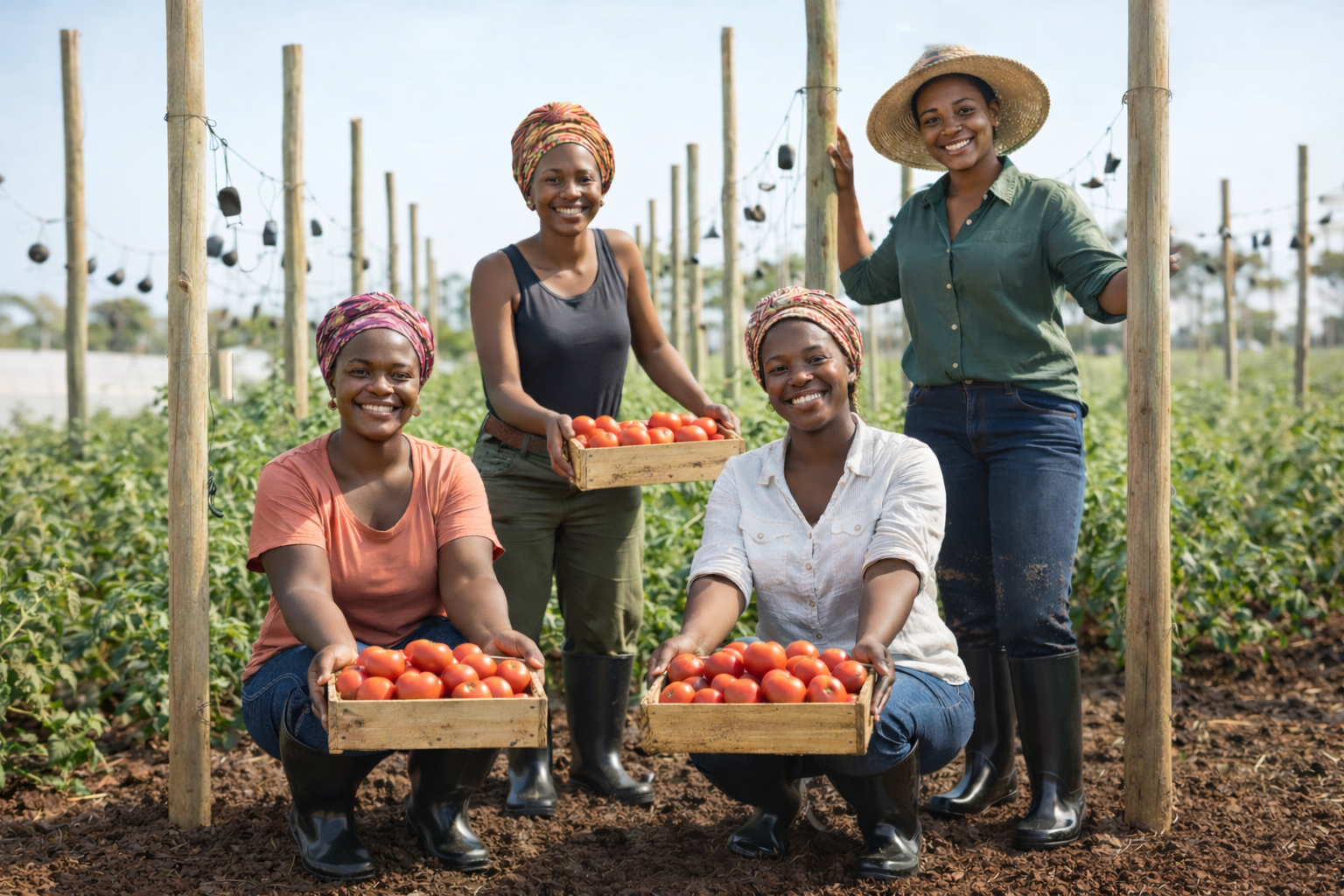
The global call by the United Nations “Rights. Justice. Action. For ALL Women and Girls”makes it clear that equality must move from aspiration to implementation especially, whereacknowledging women’s contributions is insufficient without deliberately redesigning systemsthat constrain their growth. This means guaranteeing equitable access to land ownership andcontrol, affordable finance, quality inputs, modern technology, relevant training, and meaningfulparticipation in decision-making, while confronting the legal, cultural, and economic barriers thathinder women’s ability to scale, including lack of collateral, insecure land tenure, and exclusionfrom high-value markets and policy spaces. Genuine progress requires purposeful actionthrough gender-responsive financing, targeted capacity building, inclusive policies, andleadership pathways that position women not only as producers, but as innovators, investors,aggregators, exporters, and policy influencers.
Agriculture remains one of Africa’s strongest economic pillars, employing millions andcontributing significantly to GDP across the continent. Women play a central role in foodproduction, processing, and marketing, yet they often operate in informal spaces with limitedaccess to growth capital, market intelligence, and business development support. Closing thisgap is not simply a women’s issue; it is a development imperative. Studies consistently showthat when women farmers and agripreneurs have equal access to resources, productivityincreases, household incomes rise, and food security improves. The principle of “Give to Gain”becomes particularly powerful in agripreneurship because growth in this sector is highlyrelational. Knowledge sharing, mentorship, cooperative models, and ecosystem partnershipsare essential for scaling impact. When experienced agripreneurs share practical insights onvalue addition, post-harvest handling, climate-smart agriculture, or digital marketing, theystrengthen the entire value chain. When women collaborate through networks and producergroups, they improve bargaining power, reduce operational risks, and access larger markets.Generosity in this context is not charity; it is strategic ecosystem building.
At Agripreneurship Alliance, this philosophy has guided our work in supporting women acrossdifferent stages of their entrepreneurial journeys. Through structured entrepreneurship coursesand training, women have gained foundational business skills such as opportunity identification,business model development, financial planning, customer segmentation, and market validation.Our virtual Entrepreneurship in African Agribusiness (EiAA) is tailored into value chain thinkingto enable women to move beyond primary production into processing, branding, anddistribution, allowing them to capture more value from their agricultural activities.
We have also integrated innovation and sustainability into our programs, ensuring that womenare equipped to respond to climate change, shifting consumer demands, and evolving marketsystems. Through practical learning modules and interactive workshops, women are introducedto climate-resilient farming practices, digital tools for agribusiness management, and strategiesfor accessing new markets. These approaches strengthen not only individual enterprises butalso long-term community resilience.
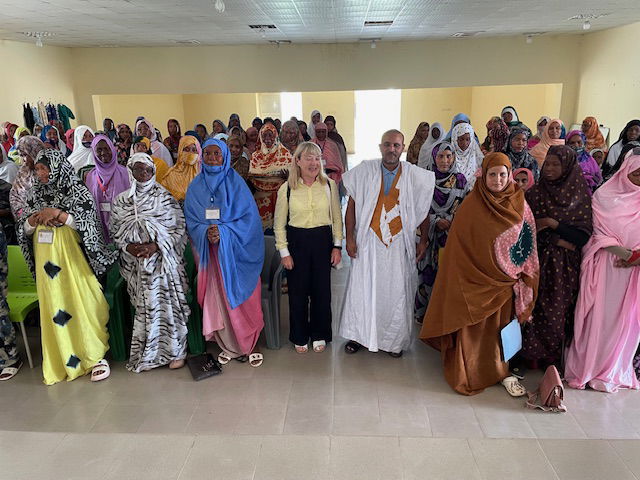
Our President, Anne Roulin, with a group of underprivileged young women in Néma, Mauritania where she was trainingthem skills to become financial independence
Importantly, Agripreneurship Alliance continues to create inclusive learning spaces wherewomen can engage confidently, ask questions freely, and build networks intentionally. Onlineplatforms and in-person engagements provide opportunities for peer learning, mentorship, andcross-sector collaboration. By making our EiAA course accessible and context-driven, wereduce barriers that often prevent women from participating in formal business developmentprograms. The impact of this support is visible in the growth of women-led agribusinesses thathave expanded from small-scale operations into structured enterprises. Women who once sawagriculture as subsistence are now positioning themselves as agribusiness owners, processors,aggregators, and service providers within the agricultural ecosystem. Confidence growsalongside competence, and leadership naturally follows.
However, sustaining this progress requires collective action. “Give to Gain” calls on womenagripreneurs to invest in one another intentionally. Sharing market information, connectingpeers to funding opportunities, mentoring young girls interested in agriculture, and advocatingfor inclusive policies are practical ways to strengthen the ecosystem. Collaboration reducesduplication of effort and builds solidarity in a sector that can often feel isolating for womenentrepreneurs.
The UN’s emphasis on rights, justice, and action reminds us that structural barriers must also beaddressed. Legal frameworks that limit women’s land ownership, financial systems that overlookwomen-owned enterprises, and cultural norms that undervalue women’s leadership requirecoordinated advocacy and reform. Empowerment must operate at both the grassroots andpolicy levels.
As we commemorate International Women’s Day 2026, the message is clear. Generosityaccelerates growth. Collaboration strengthens resilience. Intentional support advances equality.In agripreneurship, giving knowledge, time, mentorship, and opportunity does not diminish one’ssuccess; it multiplies it.
At Agripreneurship Alliance, we remain committed to expanding access to high-qualityagribusiness education, fostering innovation, and building networks that elevate women acrossagricultural value chains. We believe that when women thrive in agripreneurship, food systemsbecome stronger, economies become more inclusive, and communities become moresustainable. This year’s United Nations observance of International Women’s Day will takeplace on 9 March and focus on equal justice, purposefully aligning with the 70th session of theCommission on the Status of Women (CSW70) (from 9 to 19 March). Let us move beyondcelebration into sustained action. Let us give strategically, support intentionally, and collaborateboldly. Because when women gain, agriculture transforms and when agriculture transforms,everyone rises.
Sheila Mary Bahonya
Agripreneurship Alliance
8 March 2026