Bee Together for People and the Planet
The future of food, biodiversity, and ecological resilience depends not only on human innovation, but also on the survival of the tiny pollinators that keep natural systems alive. . This year, the United Nations’ World Bee Day 2026 carries a theme that resonates far beyond pollinator science: “Bee together for people and the planet – A partnership that sustains us all.” Bees are among the most powerful contributors to global food systems. They pollinate roughly three-quarters of the world’s flowering plants and approximately one-third of the food we eat. Africa is uniquely rich in bee biodiversity. The continent is home to the African honeybee (Apis mellifera scutellata), stingless bees, and countless wild pollinator species adapted to diverse climates from savannah to rainforest. Yet habitat loss, pesticide use, monoculture farming, and climate variability are straining these species at alarming rates. The question for Africa’s agripreneurs is not merely ecological, it is deeply economic and entrepreneurial. What does a declining bee population mean for smallholder farmers? For food sovereignty? And, critically, what opportunities exist for young Africans willing to step into this space?
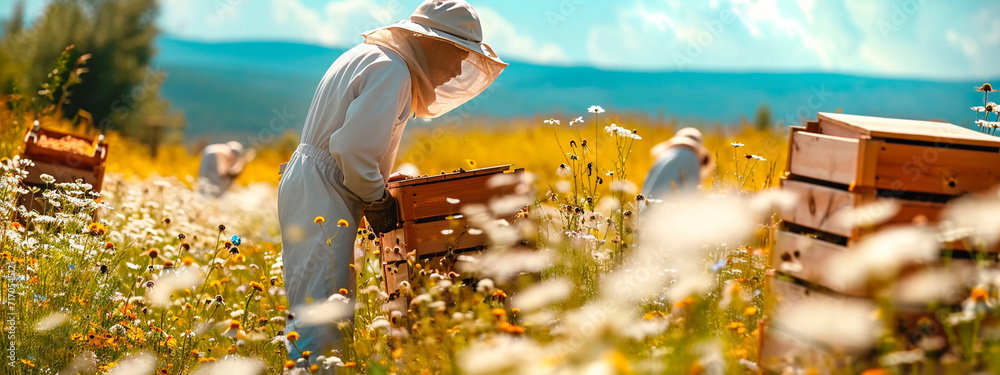
As essential pollinators sustaining roughly three-quarters of the world's flowering plants and a third of the food we eat, their impact across global agriculture is immense, providing a critical nature-based support system that boosts crop yields and diversifies economies. Just as these industrious insects demonstrate partnership in its most elemental form, the most resilient enterprises in agribusiness are not built by lone actors, but by interconnected networks of farmers, cooperatives, suppliers, and community leaders. Ultimately, by adopting regenerative, climate-smart farming practices to safeguard bee habitats, we aren't just protecting a single species, we are investing in a vital, collaborative ecosystem where both people and the planet can thrive alike.
Africa is home to the world’s youngest population. This generation is not only stepping into the future of the continent’s land and agriculture, but also facing the long-standing challenges that have shaped it from climate shocks affecting harvests, to land degradation reducing fertile soil, and biodiversity loss weakening the ecosystems that sustain food production. Yet alongside these challenges lies immense opportunity. Africa remains rich in natural resources, agricultural knowledge, and cultural heritage, while a new wave of young entrepreneurs is redefining agriculture with innovation, resilience, and a renewed vision for farming.
At the Agripreneurship Alliance, this theme resonates deeply with our mission. Across Africa, our work is rooted in the belief that meaningful change begins with collaboration and this is seen throughout our previous work with different universities and our effort in building new partnerships. We are empowering young people to build partnerships that nurture communities, strengthen livelihoods, and support resilient ecosystems from the ground up.
Our goal is to empower Africa’s youth to see themselves as changemakers capable of driving lasting solutions. Central to this mission is our Entrepreneurship in African Agribusiness (EiAA) course, a fully virtual, free-of-charge programme designed to ease accessibility to all entrepreneurs across the continent. By removing cost and geography as barriers, the EiAA course equips them with the entrepreneurial frameworks, value chain intelligence, and market insights they need to build viable, scalable agribusinesses. The EiAA course teaches young Africans how to think like entrepreneurs within agricultural systems. Participants learn to spot opportunity in undervalued value chains, including the fast-growing sectors. They develop financial literacy to turn an idea into a bankable business. They gain the systems thinking to understand how their enterprise connects to global markets, climate realities, and community wellbeing.
Across Africa, pollinator-friendly agriculture is taking shape in diverse and inspiring ways. In Ethiopia, coffee farmers in the highland forest systems benefit significantly from wild pollinators, with research showing that maintaining natural forest habitats directly improves coffee yields and quality (Gemeda et al, 2019). Smallholder farmers in Kakamega and other western regions in Kenya have documented how bee pollination enhances crop productivity and household income, reinforcing the economic value of ecosystem services (ILRI, 2006). In Ghana, studies in cocoa-growing landscapes highlight the importance of diverse pollinator species in improving cocoa fruit set and supporting stable production for one of the country’s key export crops (Frimpong et al, 2011). Beekeeping in South Africa has become an important rural enterprise, with integrated pollination services supporting fruit production such as apples and citrus, while also contributing to biodiversity conservation (FAO, 2009). Together, these examples show that across the continent, from coffee forests in Ethiopia to cocoa farms in Ghana and fruit orchards in South Africa, pollinators are quietly strengthening food systems, rural incomes, and ecosystem resilience.
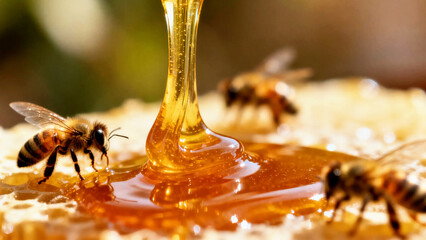
Honey production is increasingly recognised as a high-potential agribusiness opportunity, driven by growing global demand for natural, healthy, and sustainably sourced products. According to IMARC Group (2026), the global honey market reached approximately USD 10.3 billion in 2025 and is projected to grow to USD 16.9 billion by 2034, fueled by growing consumer demand for natural sweeteners, organic products, and wellness foods, as well as continued rise across the food, cosmetics, and pharmaceutical sectors. Beyond raw honey sales, viable business models include honey processing and packaging, beeswax candle and skincare production, pollination services for farms, and cooperative-based honey aggregation for local and export markets creating for young agripreneurs diverse income streams that can be integrated into broader agricultural value chains. Importantly, sustainable beekeeping creates economic value for forests and woodlands by encouraging communities to protect natural habitats that support healthy bee populations. In many rural areas, forests become more valuable when preserved for honey production than when cleared for charcoal or unsustainable land use, helping conserve biodiversity and strengthen ecosystem resilience. Beekeeping is also relatively low-cost, climate-resilient, and accessible to women and youth, making it a practical pathway for inclusive rural enterprise development. Useful training resources and international beekeeping manuals can be accessed through the National Bee Unit International Beekeeping Training Manuals.
As we celebrate World Bee Day 2026, we are reminded that sustainability is not built by human effort alone. It depends on the countless natural partnerships that quietly sustain life every day. Bees may be small, but their impact reaches across food systems, ecosystems, and livelihoods. For Africa’s youth, protecting pollinators is not simply an environmental responsibility; it is an opportunity to build resilient businesses, healthier communities, and a more sustainable agricultural future. In the end, the future of agriculture may depend less on how much we produce, and more on how well we learn to work alongside nature.
Sheila Mary Bahonya, Agripreneurship Alliance
World Bee Day, 20 May 2026
References
Gemeda, M.K., Peters, D.P.C., Tscharntke, T., Steffan-Dewenter, I. and Classen, S.D.Y. (2019) 'Effects of landscape composition on bee communities and coffee pollination in Coffea arabica production forests in southwestern Ethiopia', Agriculture, Ecosystems & Environment, 278, pp.1–10.: https://doi.org/10.1016/j.agee.2019.04.007
International Livestock Research Institute (ILRI) (2006) Apiculture training manual. Nairobi: ILRI. Available at: https://hdl.handle.net/10568/815
Frimpong, E.A., Gemmill-Herren, B., Gordon, I. and Kwapong, P.K. (2011) ‘Dynamics of insect pollinators as influenced by cocoa production systems in Ghana’, Journal of Pollination Ecology, 5(10), pp. 74–80. : https://pollinationecology.org/index.php/jpe/article/view/111
Food and Agriculture Organization of the United Nations (FAO) (2009) Bees and their role in forest livelihoods. Rome: FAO. : https://www.fao.org/4/i0842e/i0842e00.pdf
IMARC Group (2026) Global honey market report.: https://www.imarcgroup.com/global-honey-market?utm_source=